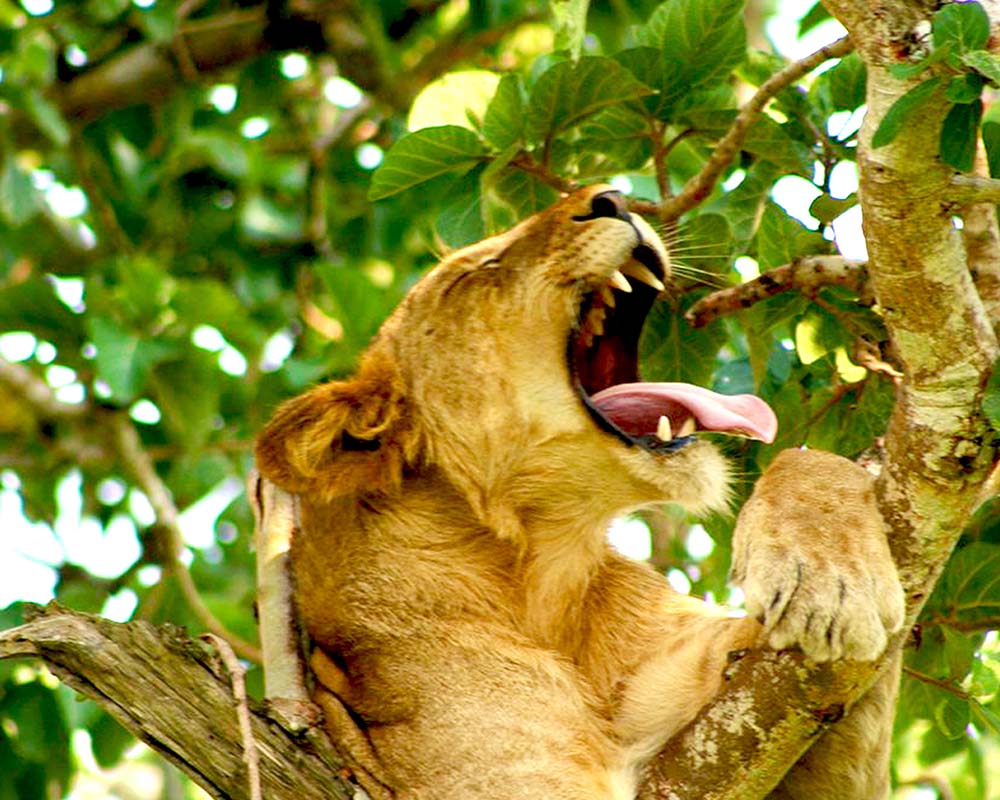
One of the most striking sights on safari is watching a lion stretch its jaws wide open in what seems like an earth-shaking roar, only to discover it is not a roar at all—it is a yawn. This behavior, often observed when lions open their mouths widely, has both a biological and social significance.
Understanding the Yawn
Yawning in lions is a natural physiological action that serves several purposes:
- Oxygen Intake: Like in humans, yawning helps increase oxygen flow to the brain and body.
- Muscle Stretching: A wide yawn stretches the jaw muscles, keeping them relaxed and ready for sudden action, especially before hunting.
- Transition Between Rest and Activity: Lions spend up to 20 hours a day resting. A yawn often marks the shift between deep rest and alertness.
The Social Meaning
Beyond the physical reasons, yawning in lions also carries a social function. Studies suggest that yawning may serve as a form of communication within the pride. When one lion yawns, it is common to see others following shortly after, indicating a contagious or synchronized behavior that strengthens group bonds.
The Formal Term
The scientific or formal term for this wide-mouthed action is “yawning”, but in behavioral studies, it is often referred to as “pandiculation” when combined with body stretching. In lions, this action signals both relaxation and preparation, an elegant reminder of their balance between calmness and power.
A Moment to Remember
For travelers, witnessing a lion open its mouth in a massive yawn can be just as memorable as watching them hunt or rest under the shade. It is a raw and authentic glimpse into the daily rhythms of the “king of beasts,” showcasing their majestic presence even in the simplest of behaviors.